
How Heat Treatment Improves Strength of Crane Wheels
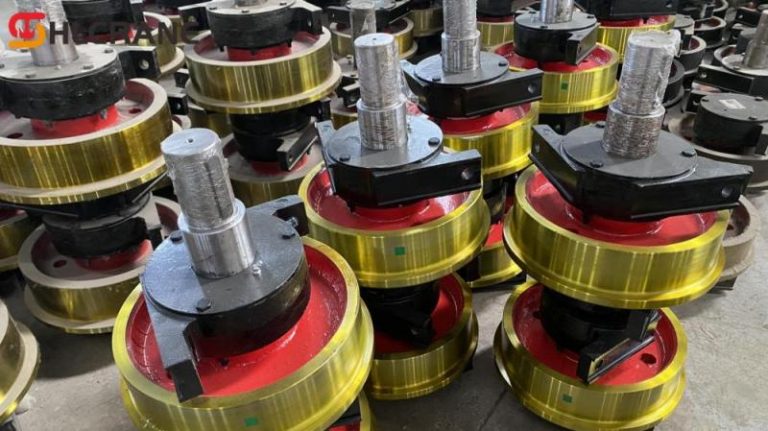
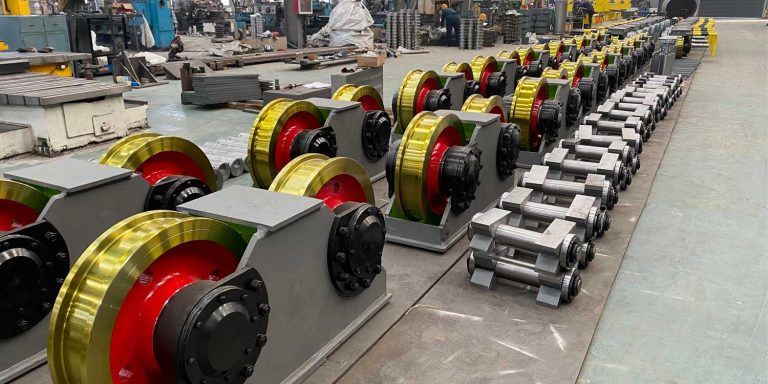
In heavy-duty lifting systems, heat treatment improves strength of crane wheels by enhancing hardness, wear resistance, fatigue performance, and service life. Crane wheels operate under constant pressure, impact loads, and friction with rails. Without proper heat treatment, wheels can wear quickly, crack under stress, or lead to expensive downtime. At HL CRANE, we manufacture crane wheels designed for demanding industrial applications where reliability and durability are critical.
Crane wheels are widely used in overhead cranes, gantry cranes, rail-mounted cranes, transfer carts, and port handling equipment. Because these wheels carry massive loads every day, the quality of heat treatment directly affects operational safety and long-term maintenance costs.
Why Crane Wheels Require Heat Treatment
Crane wheels are exposed to continuous rolling contact stress. During operation, the wheel tread and flange repeatedly contact steel rails, creating friction and localized pressure. Over time, untreated wheels may develop:
- Surface wear
- Plastic deformation
- Cracks
- Pitting
- Flange damage
- Rail misalignment
Heat treatment helps solve these problems by modifying the internal structure of the steel. The process increases surface hardness while maintaining sufficient toughness inside the wheel core.
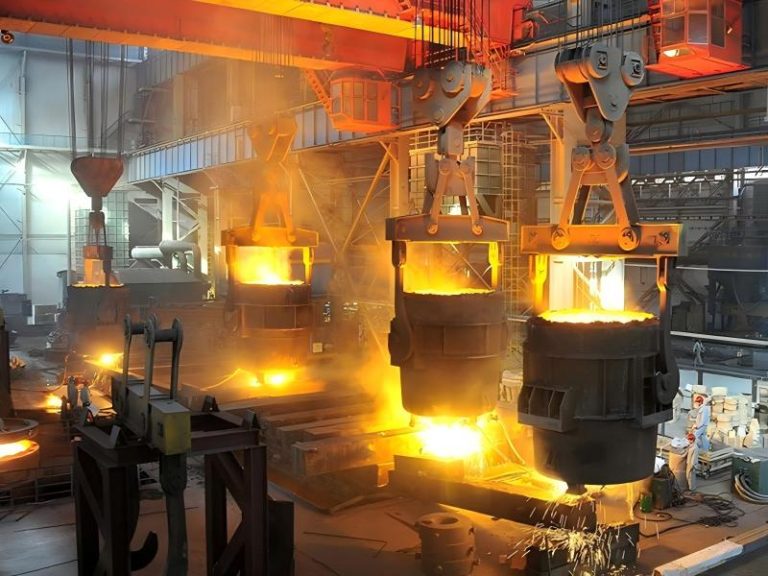
This balance between hardness and toughness is especially important for cranes working in steel mills, ports, shipyards, and manufacturing plants.
Common Materials Used for Crane Wheels
Before heat treatment, selecting the correct material is essential. Most heavy-duty crane wheels are made from alloy steels with good hardenability and impact resistance.
Common materials include:
- 42CrMo
- 35CrMo
- 65Mn
- Forged alloy steel
- ASTM standard crane wheel materials
At HL CRANE, forged crane wheels are commonly manufactured from 42CrMo because of its excellent strength and fatigue performance after heat treatment.
You can also learn more about our crane wheel manufacturing process on our website:
https://www.hnhlcranes.com/products/crane-wheels/
Main Heat Treatment Methods for Crane Wheels
Different crane applications require different heat treatment methods. The most commonly used processes include induction hardening, quenching and tempering, and surface hardening.
1. Induction Hardening
Induction hardening is one of the most widely used heat treatment methods for crane wheels.
In this process, high-frequency electrical current heats the wheel tread and flange surface rapidly. The heated area is then quenched immediately using water or polymer cooling.
Advantages include:
- High surface hardness
- Improved wear resistance
- Reduced wheel deformation
- Controlled hardened depth
- Longer service life
Typically, crane wheel surface hardness reaches HB300-380 after induction hardening.
Meanwhile, the wheel core remains relatively tough, reducing the risk of brittle fracture under impact loading.
2. Quenching and Tempering
Quenching and tempering improve the overall mechanical properties of the wheel.
The wheel is first heated to a high temperature and rapidly cooled. After quenching, tempering is performed to reduce brittleness and improve toughness.
This process provides:
- Higher tensile strength
- Better fatigue resistance
- Improved impact resistance
- Stable metallurgical structure
For large crane wheels operating under heavy loads, quenching and tempering are often combined with surface induction hardening.
3. Flame Hardening
Flame hardening uses an oxy-fuel flame to heat the wheel surface before rapid cooling.
Although less precise than induction hardening, flame hardening is still used for certain heavy industrial wheels because of its lower equipment cost.
However, induction hardening usually provides:
- Better hardness consistency
- More accurate hardened depth
- Lower deformation risk
How Heat Treatment Improves Crane Wheel Performance
Improved Wear Resistance
Wear resistance is one of the most important benefits of heat treatment.
As wheel hardness increases, the wheel surface becomes more resistant to abrasion and metal loss. This reduces tread wear and flange wear during long-term operation.
For cranes operating continuously in steel plants or ports, wear-resistant wheels significantly reduce replacement frequency.
Higher Fatigue Strength
Crane wheels experience repeated stress cycles every day. Over time, fatigue cracks may develop beneath the surface.
Proper heat treatment refines the steel structure and increases fatigue resistance, helping wheels withstand millions of load cycles.
This is especially important for automated stacking cranes, rail-mounted gantry cranes, and container handling systems.
Better Impact Resistance
Crane wheels are not only subjected to rolling loads but also sudden impact forces caused by rail joints, misalignment, or uneven loading.
A properly heat-treated wheel maintains a tough core structure, preventing catastrophic cracking.
This combination of hard surface and tough core is the reason forged heat-treated crane wheels outperform untreated cast wheels in heavy-duty environments.
Reduced Maintenance Costs
Although heat-treated wheels may cost more initially, they often reduce total operating costs over time.
Benefits include:
- Longer wheel life
- Lower rail damage
- Reduced downtime
- Fewer replacements
- Improved operational stability
For industrial crane operators, these advantages translate directly into lower maintenance expenses and higher productivity.
Importance of Hardened Depth
Surface hardness alone is not enough. Hardened depth is equally important.
If the hardened layer is too shallow:
- Wear resistance decreases quickly
- Surface may peel or spall
If the hardened layer is too deep:
- The wheel may become brittle
- Cracking risk increases
Most heavy-duty crane wheels use hardened depths ranging from 8mm to 15mm depending on wheel diameter and application.
At HL CRANE, hardened depth is carefully controlled during production to meet customer specifications and international standards.
Quality Inspection After Heat Treatment
Professional crane wheel manufacturers perform strict testing after heat treatment.
Common inspections include:
- Hardness testing
- Ultrasonic testing
- Magnetic particle inspection
- Metallographic analysis
- Dimensional inspection
These inspections ensure the wheel meets both mechanical and operational requirements before delivery.
For international standards and material guidance, many engineers also refer to:
https://www.astm.org/
Choosing the Right Crane Wheel Manufacturer
Heat treatment quality depends heavily on manufacturing experience and process control.
When selecting a supplier, buyers should evaluate:
- Forging capability
- Heat treatment equipment
- Inspection standards
- Material traceability
- Industry experience
HL CRANE specializes in forged crane wheels, crane drums, pulley blocks, and crane travel components for industrial and port crane systems worldwide.
Conclusion
Heat treatment plays a critical role in improving crane wheel strength, durability, and operational reliability. By increasing hardness, wear resistance, and fatigue performance, properly heat-treated crane wheels can operate safely under extreme industrial conditions for many years.
Whether using induction hardening, quenching and tempering, or other advanced processes, the goal remains the same: achieving the optimal balance between surface hardness and core toughness.
At HL CRANE, we continue to supply high-quality heat-treated crane wheels engineered for demanding lifting applications across ports, steel plants, shipyards, and heavy manufacturing industries.
FAQ
1. What is the best heat treatment method for crane wheels?
Induction hardening is widely considered the best method because it provides high surface hardness while maintaining core toughness.
2. What hardness is recommended for crane wheels?
Most heavy-duty crane wheels use surface hardness between HB300-380.
3. Why is hardened depth important for crane wheels?
Proper hardened depth improves wear resistance and fatigue life while preventing brittle cracking.
4. What material is commonly used for forged crane wheels?
42CrMo and 35CrMo are commonly used because they offer excellent strength and heat treatment performance.
5. How does heat treatment reduce crane maintenance costs?
Heat-treated wheels last longer, reduce rail wear, minimize downtime, and lower replacement frequency.